
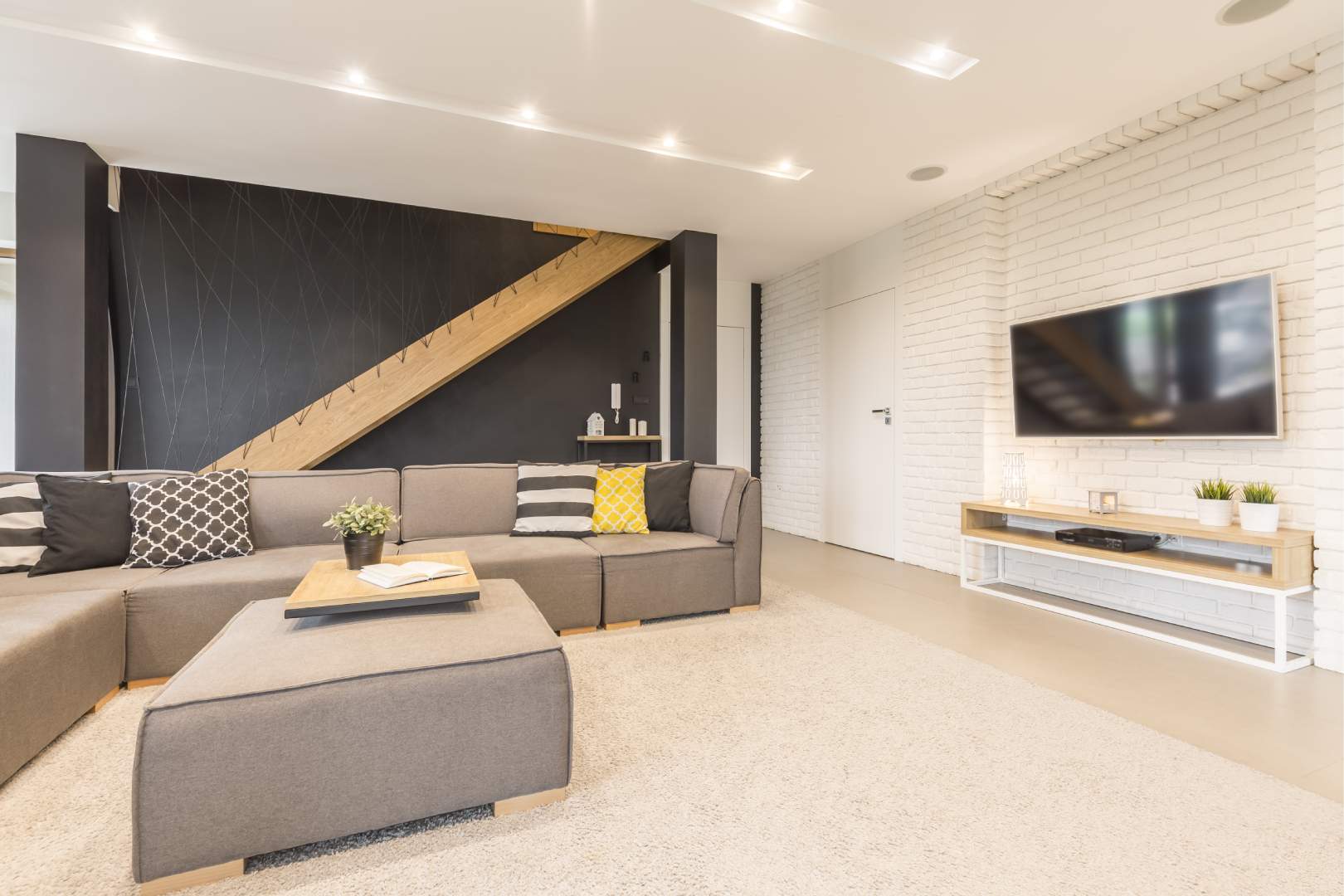
An unfinished basement can be a lot of wasted space, especially when your family needs another bedroom, a place to relax, or somewhere to work without distractions. Finishing it gives you room to spread out without changing your home’s footprint or taking on the expense of building an addition.
But the cost of the renovation, the features you add, and how long you plan to stay in your home all play a role in deciding if it’s worth doing.
Let’s look at what you can expect to spend, what kind of value a finished basement adds, and what to consider before starting construction.
What Does It Cost to Finish a Basement in Colorado Springs?
Basement finishing costs depend heavily on how much space you’re renovating and what you want to do with it. Turning an unfinished basement into a family room with flooring, drywall, lighting, and a few outlets is a fairly straightforward project compared with building a guest suite with a bedroom, full bathroom, wet bar, and custom storage.
For basement finishing in Colorado Springs, a reasonable starting point for contractor-led renovations is around $50 to $90 per square foot, although more involved projects can exceed that range.
| Basement size | Estimated cost |
|---|---|
| 500 sq. ft. | $25,000–$45,000 |
| 800 sq. ft. | $40,000–$72,000 |
| 1,000 sq. ft. | $50,000–$90,000 |
| 1,200 sq. ft. | $60,000–$108,000 |
Those numbers can climb quickly with a few additions. Installing a basement bathroom, for example, may cost $15,000–$25,000, particularly if new plumbing lines or concrete cutting are involved. Egress window installation can run another $2,500–$5,500 per window, depending on excavation, window well requirements, and site conditions.
Want to add extra finishes? You might want to use luxury vinyl plank flooring for its durability and moisture resistance or add recessed lights, wall sconces, built-in shelving, custom cabinetry, and entertainment centers to help the space feel more like the rest of the home, though each adds to the cost.
You don’t have to finish the entire basement either. Leaving a mechanical room or a portion of the space for storage can free up your budget for a bathroom, better lighting, or features you’ll use regularly.
How Much Value Does a Finished Basement Add?
Finished basements add usable living space without requiring a larger home footprint, but the resale return isn’t dollar-for-dollar. Appraisers generally value below-grade finished space differently from above-grade square footage, so your basement won’t necessarily be valued the same way as an additional bedroom or living room on the main floor.
According to the National Association of Realtors’ 2025 Remodeling Impact Report, basement conversions to living space recoup approximately 71% of their cost at resale. Using that figure, a $60,000 basement remodel would recover roughly $42,600.
However, that’s a national estimate, not one specifically for Colorado Springs. Local home prices, the quality of the renovation, the layout, whether the basement is finished, and buyer demand all influence resale value. Beyond selling your home, you also get to enjoy the additional space for as long as you live there, which can make the investment worthwhile even if you don’t recover the full cost.
What Can You Do With Your Basement?

An unfinished basement gives you plenty of options, especially if you don’t need to work around existing rooms or finishes. You can divide the space into separate areas or keep it open, depending on your family’s needs and the available square footage.
Some popular basement remodeling ideas include:
- Family room: Create a comfortable place for movie nights, board games, watching sports, or relaxing without taking over the main living room.
- Guest suite: Give visiting family and friends their own bedroom, bathroom, and some privacy during longer stays.
- Home office: Set up a quieter workspace away from the kitchen, living room, and everyday household distractions.
- Home gym: Keep weights, exercise equipment, and workout space in one dedicated area instead of squeezing everything into a spare room.
- Entertainment space: Add a home theater, wet bar, gaming area, or somewhere to gather with friends.
- Extra bedroom: Make room for older kids who want more privacy or family members who may eventually need a place to stay.
You can even combine several of these ideas if you don’t want to pick just one. An open family room with a small home office tucked into one corner or a guest bedroom beside a nearby bathroom can make good use of the space without making the basement feel crowded.
Colorado Springs Basements Need a Little Extra Planning
Colorado’s weather and soil conditions make moisture control particularly important during basement renovations. Spring snowmelt, shifting soils along the Front Range, and water entering through foundation walls can create problems if they aren’t addressed before being covered up.
Check for moisture before finishing the walls
Look for water stains, damp spots, musty smells, peeling paint, or signs of previous flooding. If the basement has had water problems, identify the source and address it before installing insulation, drywall, or flooring.
Waterproofing, drainage, and the right vapor barriers and materials can help keep moisture out and protect your finished basement. Cutting corners here could leave you dealing with mold, damaged flooring, or having to tear open finished walls to fix a problem that should have been addressed earlier.
Don’t forget about radon
Radon is a naturally occurring gas that can enter homes through cracks and openings in the foundation. El Paso County falls within EPA Radon Zone 1, the highest potential risk category, and local testing data shows that elevated levels are common in the area.
Testing your basement before turning it into a bedroom or living space is a smart move. If radon levels are high, mitigation may be needed to bring them down before the renovation is finished.
You can learn more about testing and mitigation through El Paso County Public Health’s radon resources.
Permits and building requirements
Basement finishing involves more than framing walls and choosing paint colors. Electrical work, plumbing, mechanical changes, structural modifications, and creating bedrooms can all trigger specific building requirements.
The Pikes Peak Regional Building Department oversees permits and inspections in Colorado Springs and surrounding jurisdictions. Its residential basement finishing requirements cover things like ceiling height, bedroom egress, framing, electrical, plumbing, and other safety requirements.
If you’re planning a basement bedroom, you’ll need to account for egress requirements in the layout. Installing a compliant window may involve excavation and can affect where the bedroom sits within the basement, so it’s best to work those details into the design.
Is Basement Finishing a Smart Investment For You?
If you’re running out of room upstairs or want to make better use of your unfinished basement, the renovation could be well worth the investment. You’ll have more room to enjoy your home, accommodate family, or pursue hobbies, all without building an addition. It can also make your property more attractive to buyers when you’re ready to sell.
You don’t need to go overboard with upgrades to get a basement you’ll love. A comfortable layout, good lighting, durable flooring, and enough storage can go a long way in making the space feel like a natural extension of your home.
MTD Construction can help you figure out what’s possible with your basement, work through the layout and costs, and bring your ideas to life with a plan that fits your home and budget. Contact us to start a conversation!